
thomas guide maps
- Published
- in Guide
Thomas Guide maps, a series of spiral-bound atlases, provided detailed street maps of metropolitan areas, primarily within the United States, becoming essential
for navigation.
These guides, especially popular in Southern California, represent a significant piece of automotive and cartographic history, predating widespread digital mapping solutions.
The Thomas Guide journey mirrors the rise of California car culture, beginning in Oakland in 1915 and evolving into a nostalgic icon for generations of drivers.
What Were Thomas Guide Maps?
Thomas Guide maps were a distinctive series of spiral-bound, paperback atlases meticulously detailing the street networks of major U.S. cities, with a strong focus on metropolitan areas like Los Angeles and Orange County.
Unlike traditional folded road maps, the Thomas Guide offered a comprehensive and highly detailed representation of urban landscapes, enabling drivers to navigate complex city streets with relative ease.
These atlases weren’t merely collections of roads; they included building outlines, points of interest, and a robust indexing system, facilitating precise location finding.
Published annually and frequently updated, the Thomas Guide became synonymous with Southern California car culture, serving as an indispensable tool for residents and visitors alike before the advent of GPS technology.
The guides were known for their durability and practicality, designed to withstand frequent use within the confines of a vehicle, solidifying their place in automotive history.
The Significance of the Thomas Guide in Automotive History
The Thomas Guide holds a pivotal position in automotive history, representing a crucial navigational aid during a period of rapid urban expansion and increasing car ownership.
Before the proliferation of digital mapping systems like Google Maps and Waze, the Thomas Guide empowered drivers with the ability to confidently explore and navigate unfamiliar cities.
It democratized access to detailed urban mapping, moving beyond simple road outlines to provide a comprehensive understanding of street layouts and local points of interest.
The guide’s influence extended beyond mere navigation; it shaped how people interacted with and perceived urban spaces, fostering a sense of independence and exploration.
As a cultural artifact, the Thomas Guide symbolizes a bygone era of analog navigation, evoking nostalgia for a time when getting lost was part of the adventure.

The History of Thomas Brothers Maps
Thomas Brothers Maps began in 1915, founded by George Coupland Thomas in Oakland, California, initially focusing on creating detailed maps to aid drivers navigating city streets.
George Coupland Thomas: The Founder
George Coupland Thomas, a skilled cartographer, stands as the visionary founder of Thomas Brothers Maps, the company behind the iconic Thomas Guide. His dedication to providing accurate and detailed street maps revolutionized navigation for drivers, particularly in rapidly expanding urban areas.
Prior to establishing his mapmaking enterprise, Thomas possessed a keen understanding of the growing need for reliable navigational tools as automobile ownership surged. Recognizing the limitations of existing maps, he embarked on a mission to create a superior product, meticulously surveying streets and compiling comprehensive data.
Thomas’s commitment to precision and clarity laid the foundation for the Thomas Guide’s enduring success, transforming it from a local resource into a nationally recognized standard for street atlases. His legacy continues to resonate with map enthusiasts and those who fondly remember relying on the Thomas Guide for guidance.
Early Years and Establishment (1915)
Thomas Brothers Maps officially began in 1915, founded in Oakland, California, by George Coupland Thomas and his two brothers. This initial venture arose from a practical need: the lack of accurate and detailed street maps for the burgeoning automobile-driving public. The early focus was on providing drivers with reliable navigational tools in the Oakland area.
The company’s first maps were painstakingly created through direct observation and surveying, a laborious process that ensured exceptional accuracy. These early editions weren’t the spiral-bound atlases that would later define the Thomas Guide, but rather individual maps catering to specific areas.
This foundational period established a commitment to detail and quality that would become synonymous with the Thomas Guide name, setting the stage for its eventual expansion and dominance in the street atlas market. It was a humble beginning for a mapmaking empire.
Expansion Beyond Oakland
Following its successful establishment in Oakland, Thomas Brothers Maps strategically began expanding its coverage area throughout California. Recognizing the growing popularity of automobiles and the increasing demand for detailed road maps, the company extended its reach to encompass other major cities and regions within the state.
This expansion wasn’t merely about increasing geographic coverage; it involved refining the mapmaking process and adapting to the unique challenges presented by different urban landscapes. The company invested in improved surveying techniques and cartographic methods to maintain its reputation for accuracy.
Crucially, the expansion laid the groundwork for the Thomas Guide’s eventual dominance in Southern California, particularly in Los Angeles, which would become its most significant market. This period marked a transition from a local mapmaker to a regional powerhouse.

The Golden Age of the Thomas Guide
Thomas Guide dominated pre-digital mapping, becoming indispensable for drivers with its detailed maps and unique features, especially its durable spiral binding and widespread availability.
Dominance Before Digital Mapping
Thomas Guide maps reigned supreme as the premier navigational tool for decades, holding an unchallenged position before the advent of GPS technology and digital mapping applications. For countless drivers, particularly in sprawling metropolitan areas like Los Angeles, the Thomas Guide wasn’t merely a map; it was an essential companion, a trusted guide, and a symbol of independence on the road.
Prior to the proliferation of smartphones and in-car navigation systems, drivers relied heavily on the detailed, meticulously updated street maps contained within these spiral-bound atlases; The Thomas Guide filled a critical need, offering a level of granular detail and localized knowledge that simply wasn’t available elsewhere. Its dominance wasn’t just about convenience; it was about necessity, enabling efficient travel and exploration in a rapidly expanding urban landscape.
The sheer ubiquity of the Thomas Guide within vehicles cemented its cultural significance, representing a tangible connection to the open road and the freedom of personal transportation.
Features That Made Thomas Guide Unique
Several key features distinguished Thomas Guide maps from competing cartographic products, contributing to their widespread popularity and enduring legacy. The incredibly detailed street maps, meticulously updated through extensive field research, provided a level of accuracy unmatched by many contemporaries. Beyond simply showing roads, the guides incorporated landmarks, building outlines, and points of interest, offering a comprehensive view of the urban environment.
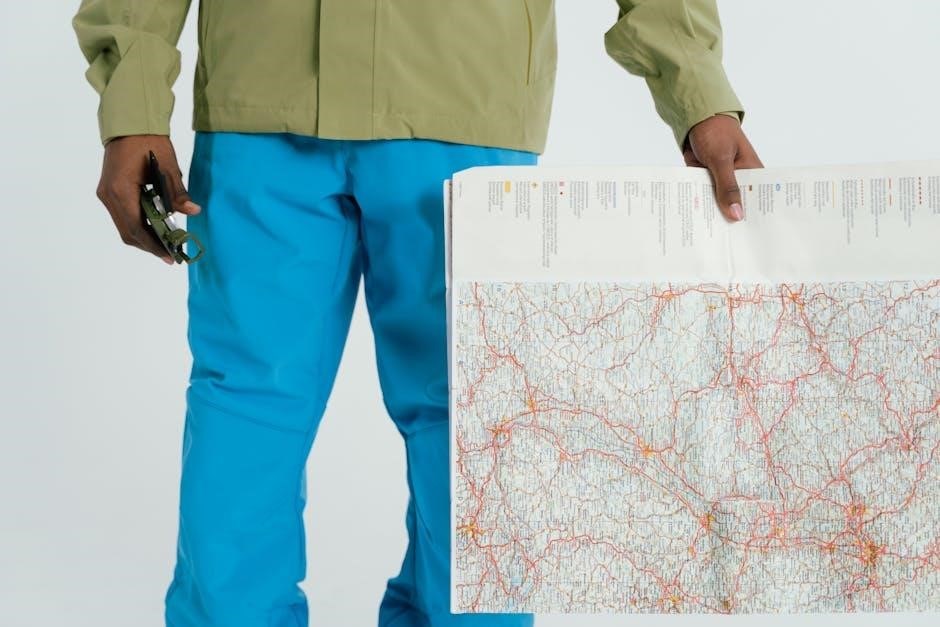
Crucially, the inclusion of a robust indexing system allowed drivers to quickly locate specific addresses and navigate unfamiliar areas. This, combined with the innovative grid system, facilitated precise location identification and efficient route planning. The spiral binding, a practical design choice, allowed the map to lay flat while driving, enhancing usability and safety.
These combined elements created a uniquely user-friendly and reliable navigational experience.
The Spiral Binding and Durability
The distinctive spiral binding of the Thomas Guide wasn’t merely an aesthetic choice; it was fundamental to the map’s practicality and enduring appeal. Unlike traditional book bindings, the spiral allowed the atlas to lay remarkably flat, a crucial feature for drivers attempting to navigate while on the road. This design facilitated easy viewing of large map sections without constant need for readjustment or holding the book open.
Beyond convenience, the Thomas Guide was renowned for its exceptional durability. Constructed with robust paper stock and a sturdy cover, these maps were built to withstand frequent use and the rigors of daily life.
This resilience contributed significantly to their longevity, becoming trusted companions for generations of drivers.

The Thomas Guide and Southern California
Thomas Guide maps achieved immense popularity in Southern California, particularly Los Angeles, becoming synonymous with navigating the region’s sprawling freeways and complex street networks.
Los Angeles as a Key Market
Thomas Guide maps found their most fervent and enduring fanbase within the sprawling metropolis of Los Angeles and Orange County. The region’s unique geography, characterized by rapid suburban expansion and an intricate network of roadways, created a critical need for detailed and reliable navigational tools.
The sheer scale of Los Angeles, coupled with its car-centric culture, propelled the Thomas Guide to dominance. Unlike other cities, Los Angeles drivers heavily relied on these maps for daily commutes, weekend explorations, and navigating unfamiliar territories.
The 57th edition, recently published as of December 2025, demonstrates the continued, albeit nostalgic, demand for the physical atlas, even in the age of digital mapping. This enduring popularity solidifies Los Angeles’s position as the cornerstone of the Thomas Guide’s success story.
The 57th Edition and Continued Publication
The recent publication of the 57th edition of the Los Angeles-Orange County Thomas Guide, as of late 2025, signifies a remarkable continuation of a nearly century-old tradition. Despite the overwhelming prevalence of digital mapping applications like Google Maps and Waze, a dedicated audience still seeks the tactile experience and comprehensive detail offered by the physical atlas.
This continued publication isn’t merely a matter of nostalgia; it speaks to a lingering trust in the Thomas Guide’s accuracy and completeness. While digital maps rely on connectivity and data updates, the Thomas Guide offers a self-contained, reliable resource.
The enduring demand, even in a diminished capacity, demonstrates the Thomas Guide’s lasting legacy and its unique place in the hearts of Southern California drivers.
Thomas Guide’s Role in Car Culture
The Thomas Guide became inextricably linked with Southern California’s burgeoning car culture, evolving alongside the region’s expanding freeway system and suburban sprawl. Before GPS navigation, it was the indispensable companion for drivers exploring Los Angeles and beyond, fostering a sense of independence and adventure.
The maps weren’t just tools for getting from point A to point B; they were portals to discovering hidden neighborhoods, local businesses, and the vastness of the California landscape. The act of unfolding the spiral-bound atlas and plotting a route became a ritual for many.
The Thomas Guide empowered drivers, transforming them from passive passengers into active navigators, deeply embedding itself within the region’s automotive identity.

The Decline and Legacy
Thomas Guide maps faced decline with the rise of GPS and digital mapping like Google Maps, Waze, and MapQuest, becoming a nostalgic icon.
Despite this shift, the Thomas Guide remains a symbol of a bygone era, fondly remembered by those who relied on its detailed pages.
The Rise of GPS and Digital Maps
Thomas Guide maps’ dominance began to wane with the advent of Global Positioning System (GPS) technology and the subsequent proliferation of digital mapping applications.
Initially, in-car navigation systems offered a computerized alternative, but the true disruption came with the accessibility of map data on personal computers and, crucially, mobile devices.
Services like MapQuest, and later Google Maps, provided free, regularly updated maps, searchable addresses, and turn-by-turn directions, features the Thomas Guide couldn’t match.
The convenience of voice guidance and dynamic rerouting, responding to real-time traffic conditions, proved irresistible to drivers accustomed to the static pages of the spiral-bound atlas.
Waze further revolutionized navigation by incorporating crowdsourced data, offering insights into accidents, hazards, and police presence, solidifying the shift away from traditional paper maps.
This digital revolution fundamentally altered how people navigated, rendering the Thomas Guide increasingly obsolete for everyday use.
Impact of Google Maps, Waze, and MapQuest
The emergence of Google Maps, Waze, and MapQuest dramatically accelerated the decline of the Thomas Guide, offering functionalities previously unimaginable with paper atlases.
MapQuest, an early pioneer, provided digital maps and driving directions online, attracting a large user base and demonstrating the potential of internet-based navigation.
Google Maps then raised the bar with its superior mapping data, satellite imagery, and Street View, offering a visually rich and interactive experience.
Waze distinguished itself through real-time, crowdsourced traffic information, allowing drivers to avoid congestion and optimize their routes dynamically.
These platforms were free or low-cost, regularly updated, and accessible on smartphones, making them far more convenient than purchasing and updating a Thomas Guide annually.
The ease of search, turn-by-turn voice guidance, and automatic rerouting proved irresistible, effectively replacing the Thomas Guide as the primary navigation tool for most drivers.
Thomas Guide as a Nostalgic Icon
Despite its decline, the Thomas Guide endures as a potent symbol of a bygone era, evoking strong feelings of nostalgia for many Southern Californians and beyond.
For generations, the spiral-bound atlas represented independence, exploration, and the freedom of the open road, becoming deeply ingrained in car culture.
The act of physically unfolding the map, tracing routes with a finger, and memorizing landmarks fostered a unique connection to the landscape.
Today, vintage Thomas Guides are collected by enthusiasts, serving as tangible reminders of a time before ubiquitous digital navigation.
Its place in California history is secure, representing a period of rapid growth, suburban expansion, and the increasing reliance on automobiles.
The Thomas Guide isn’t just a map; it’s a cultural artifact, a testament to a simpler time, and a cherished memory for those who navigated with its help.

Technical Aspects of Thomas Guide Maps
Thomas Guide maps were renowned for their exceptional detail, accuracy, and frequent updates, utilizing a comprehensive grid system and detailed indexing for efficient navigation.
Map Detail and Accuracy
Thomas Guide maps distinguished themselves through an unwavering commitment to detail and accuracy, a crucial factor in their widespread adoption and enduring popularity. Each edition meticulously depicted street networks, building footprints, and points of interest with remarkable precision, far exceeding the standards of many contemporary maps.
Cartographers employed rigorous surveying techniques and continuously updated information, ensuring that the maps reflected the ever-changing urban landscape. This dedication extended to the inclusion of subtle yet vital details, such as one-way streets, traffic signals, and even the locations of fire hydrants.
The accuracy wasn’t merely aesthetic; it directly impacted drivers’ ability to navigate unfamiliar territories confidently and efficiently. This level of detail fostered a strong reliance on the Thomas Guide, establishing it as an indispensable tool for both residents and visitors alike.
Updating and Revising Editions
A cornerstone of the Thomas Guide’s success was its consistent cycle of updating and revising editions. Recognizing the dynamic nature of urban environments, Thomas Brothers Maps prioritized keeping their publications current, a process demanding significant resources and logistical coordination.
Teams of cartographers and field personnel diligently tracked new road construction, building developments, and changes to street layouts; This information was then incorporated into subsequent editions, ensuring that map users had access to the most accurate and reliable navigational data available.
The frequency of updates varied depending on the rate of change within a specific metropolitan area, but generally, new editions were released annually or bi-annually. This commitment to continuous improvement solidified the Thomas Guide’s reputation for trustworthiness.
The Grid System and Indexing
The Thomas Guide distinguished itself through a meticulously designed grid system overlaid on its maps, facilitating precise location identification. Each map was divided into clearly marked grid squares, assigned alphanumeric coordinates, enabling users to pinpoint addresses with remarkable accuracy – a crucial feature before widespread GPS technology.
Complementing the grid system was a comprehensive index, listing streets alphabetically and cross-referencing them with their corresponding grid coordinates; This dual-layered approach allowed drivers to quickly locate destinations, even without prior familiarity with the area.
The indexing wasn’t limited to street names; it often included points of interest, parks, and public buildings, enhancing the guide’s overall utility. This thoughtful design made the Thomas Guide an indispensable tool for navigating complex urban landscapes.

Collecting Thomas Guides Today
Thomas Guides, especially vintage editions, are increasingly sought after by collectors, with rarity and condition influencing their value. Online communities and resources
facilitate trading.
Rarity and Value of Vintage Editions
Vintage Thomas Guides are experiencing a surge in collectibility, with value heavily influenced by several key factors. Earlier editions, particularly those from the pre-digital mapping era, command higher prices due to their historical significance and limited availability.
Condition plays a crucial role; pristine copies with intact spiral bindings and minimal wear are significantly more valuable than those showing extensive use. Specific geographic areas, like Los Angeles, often fetch premiums due to the region’s strong association with the Thomas Guide.
First editions and those featuring unique cover designs or promotional materials are highly prized. The 57th edition, being a recent publication, doesn’t yet hold the same collectible value as older versions. Collectors often seek complete sets spanning multiple years to document the evolution of the maps and the changing urban landscape.
Auction sites, online marketplaces, and specialized map dealers are common venues for buying and selling these historical artifacts, with prices ranging from a few dollars to several hundred, depending on the aforementioned criteria.
Preservation and Restoration
Preserving vintage Thomas Guides requires careful handling to prevent further deterioration. Storage in a cool, dry environment, away from direct sunlight, is paramount. Acid-free sleeves or boxes can protect covers and pages from dust and damage.
Restoration, however, is a delicate process best left to professionals. Attempting repairs with inappropriate adhesives or materials can diminish a guide’s value. Common restoration needs include reattaching loose spiral bindings and repairing torn pages.
Gentle cleaning with a soft brush can remove surface dirt, but harsh chemicals should be avoided. Digitization – scanning or photographing pages – offers a non-invasive way to preserve content and share it with others.
Online communities provide valuable advice on best practices for preservation, and resources exist for locating qualified restoration specialists. Prioritizing preventative care is key to maintaining these historical maps for future generations.
Online Communities and Resources
A vibrant online community surrounds Thomas Guide maps, offering collectors and enthusiasts platforms to connect, share knowledge, and trade guides. Forums and social media groups dedicated to vintage maps and California history frequently feature discussions about Thomas Guides.
Websites specializing in antique maps often list Thomas Guides for sale, providing a marketplace for collectors. Digital archives are emerging, showcasing scanned editions and historical information about the maps’ evolution.
Online resources also offer guidance on identifying different editions, assessing value, and understanding the maps’ historical context. Dedicated blogs and articles delve into the cultural significance of the Thomas Guide.
These digital spaces foster a collaborative environment, allowing individuals to contribute to the preservation and appreciation of this iconic piece of cartographic history.

Thomas Guide in Popular Culture
Thomas Guides frequently appear as symbols of a bygone era in film and television, representing California’s car culture and a pre-digital age of navigation.
The maps embody a nostalgic connection to the state’s history, often used to evoke a sense of place and time within storytelling contexts.
References in Film and Television
Thomas Guide maps have made notable appearances in various films and television shows, often serving as visual shorthand for a specific time period or location, particularly Southern California.
These appearances aren’t merely props; they frequently contribute to character development or plot points, highlighting the reliance on physical maps before the advent of GPS technology;
The guides often symbolize a sense of being “lost” or the need for direction, both literally and metaphorically, within a narrative. Their presence can evoke nostalgia and a connection to a simpler era.
Instances include detectives poring over maps to track suspects, characters using them to navigate unfamiliar cities, or simply a Thomas Guide visible in a car’s passenger seat, establishing a sense of realism and place.
These cameos reinforce the Thomas Guide’s cultural significance and its enduring image as an iconic symbol of American road trips and urban exploration.
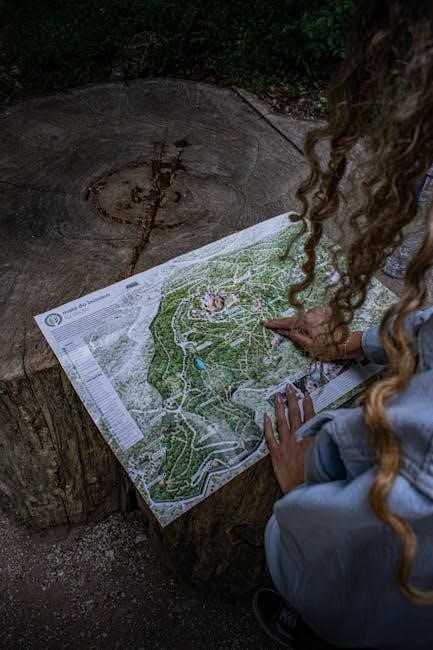
The Thomas Guide as a Symbol of a Bygone Era
The Thomas Guide transcends its function as a mere map; it embodies a specific era of American life, representing a time before ubiquitous digital navigation and instant connectivity.
It symbolizes a slower pace of travel, requiring drivers to actively engage with their surroundings and plan routes meticulously, fostering a deeper connection to the landscape.
For many, the spiral-bound atlas evokes fond memories of family road trips, exploring new cities, and the satisfying ritual of unfolding the map to chart a course.
The guide’s decline parallels the shift towards a more digitally-dependent society, making it a poignant reminder of a pre-digital world and a simpler way of life.
Today, the Thomas Guide serves as a nostalgic icon, cherished by collectors and those who remember a time when getting lost was part of the adventure.
Its Place in California History
The Thomas Guide is inextricably linked to the history of California, particularly Southern California, mirroring the state’s rapid growth and evolving car culture throughout the 20th century.
Originating in Oakland in 1915, the maps quickly became essential tools for navigating the expanding urban landscapes of Los Angeles and Orange County, facilitating the region’s sprawl.
The guides documented the changing streetscapes and infrastructure, providing a visual record of California’s development and serving as a vital resource for residents and newcomers alike.
Its enduring presence for decades cemented its status as a cultural artifact, representing a unique chapter in California’s automotive and cartographic heritage.
Even with the rise of digital maps, the Thomas Guide remains a symbol of California’s past, fondly remembered by generations of drivers and map enthusiasts.